
National Weather Service United States Department of Commerce

An "unseasonably warm" cold front is set to arrive late this afternoon, driving temperatures into the upper 50s and lower 60s. This mild system will bring scattered light rain—totaling around a tenth of an inch—which, when combined with the melting snowpack, may generate substantial runoff. Residents are advised to be on alert for ice jams on rivers and streams, with flooding possible throughout the week. By Wednesday morning, the precipitation will transition back to light snow, leaving only a dusting across the higher elevations.
The table contrasts the past 25 days, January 15 through February 9, in terms of temperatures relative to normal, with the forecast for the next 7. Temperatures averaged some 12 to 16 degrees below normal during our deep freeze at our six climate sites. By contrast, they are forecast to average just above normal over the next 7 days, although it will actually be a bit below normal to finish out the work week after an unseasonably mild day on Tuesday. Snowfall over the deep freeze ranged from 5 to 10 inches over the lowlands to a foot and a half or more in the mountains, bringing snow depth up to at least a couple of inches across the lowlands, and a half a foot or more in the mountains. Upslope mountain snow showers Wednesday and a wintry mix in the mountains this weekend may bring light accumulations, but snow depth will generally decrease over the next 7 days.
Increasing potential for ice jams and localized flooding exists throughout the week and upcoming weekend, caused by melting snowpack and rainfall running off into rivers and streams. The increased water flow is expected to break up river ice, creating jams that can lead to water level rises and flooding both upstream of the jam and downstream if the blockage suddenly releases. To mitigate risks, pay close attention to water levels and stay informed through the latest forecasts.
Melting snow running off onto roadways, parking lots, driveways and sidewalks by day and refreezing at night could lead to black ice. Use caution of driving or walking outside.
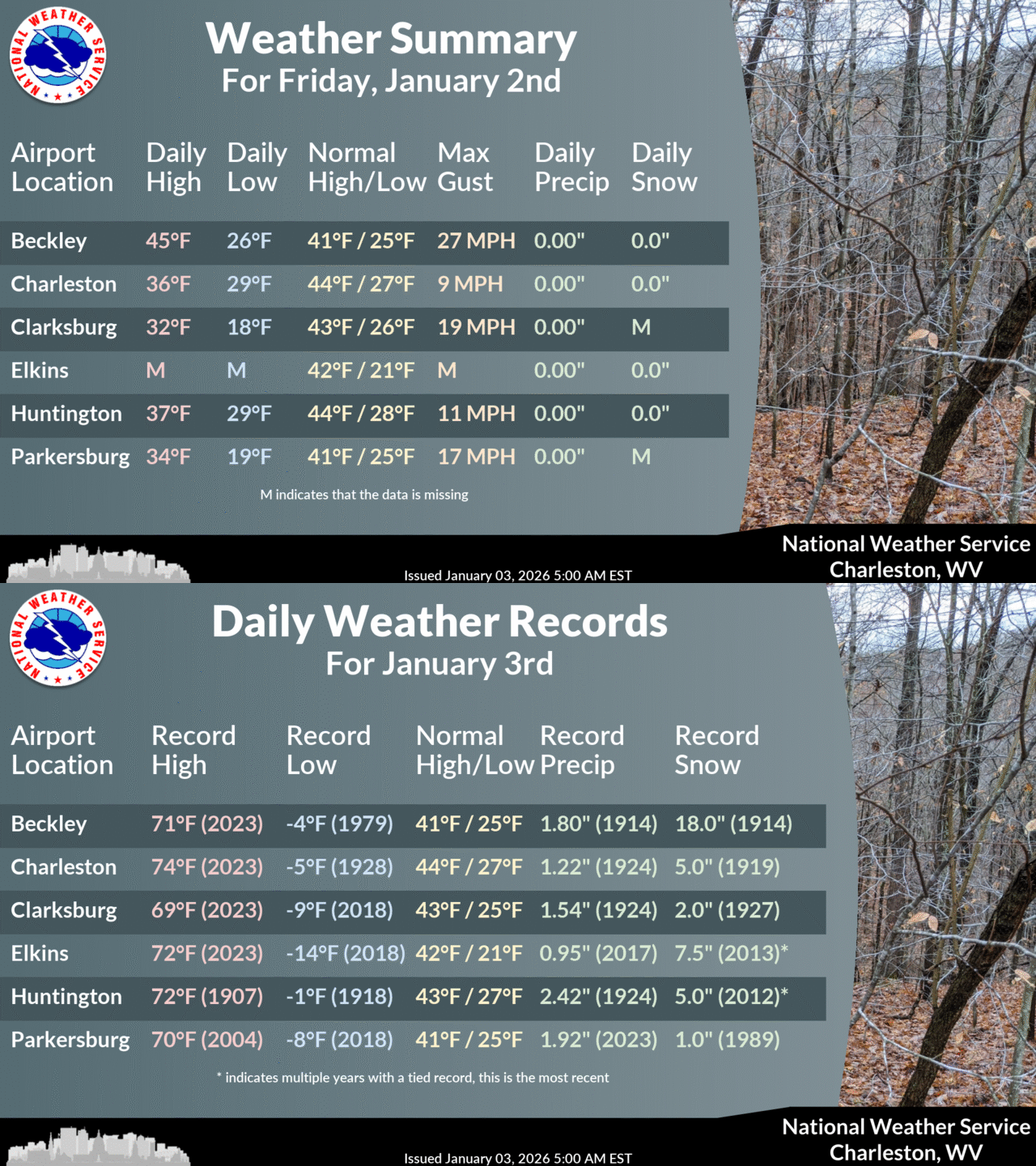
Daily climate information from each of the six climate sites in the NWS Charleston forecast area - Beckley, WV (KBKW); Charleston, WV (KCRW); Clarksburg, WV (KCKB); Elkins, WV (KEKN); Huntington, WV (KHTS); and Parkersburg, WV (KPKB).


Current Weather, Radar & Satellite Rivers & Lakes Weather Hazard Outlook Weather Hazard Briefing Winter Weather Forecasts


What should I do in a flood? What should I do in a tornado? How do I stay safe in a thunderstorm? How do I stay safe in a winter storm?