
National Weather Service United States Department of Commerce

An approaching cold front will provide one more round of showers and isolated thunderstorms as it crosses this afternoon into tonight. As the front encounters remnant tropically influenced air to the south, some of these may become heavy and produce a quick 1 to 2 inches across the area where a Flash Flood Watch remains in effect. Remember, when encountering flooded roadways, turn around don't drown. Drier conditions are then expected in the wake of the cold front through the day Sunday with the next chance of widespread precipitation coming Sunday night into Monday.
It was a very warm spring across the area, even record setting in some cases. The spring season encapsulates the period of March 1st through May 31st. Average temperatures this spring were generally 2 to 6 degrees above normal. This translated into all six official NWS Charleston climate locations making the Top 5 in terms of their warmest mean spring temperatures on record. In fact, Huntington had its warmest spring on record, while Elkins tied for the warmest on record. Precipitation totals this spring varied across the forecast area, ranging from approximately 8 to 17 inches, with the heaviest totals being across the far northern portion of the County Warning Area in parts of southeast Ohio and the northern West Virginia lowlands, where a surplus of approximately 1 to 5 inches occurred. The CoCoRaHS station just northeast of Stuart, Ohio (Athens County) observed 17.00 inches this spring. The opposite was true across northeast Kentucky, central and southern West Virginia, and southwest Virginia where below normal precipitation occurred across the vast majority of the area, with most locations ending up 1 to 5 inches below normal, even slightly greater in some cases. For instance, the Charleston Weather Forecast Office observed only 8.27 inches, resulting in a spring deficit of 5.44 inches. Even with these precipitation departures across the forecast area, no top 10s were set at any of the official NWS Charleston climate locations in terms of the wettest or driest springs on record. Snowfall totals for the spring season across the forecast area trended towards below normal, although pockets of near to slightly above normal snowfall did occur in some areas, primarily across portions of the central and northern lowlands. No Top 10s were set this spring at any of the official NWS Charleston climate locations in terms of snowfall.
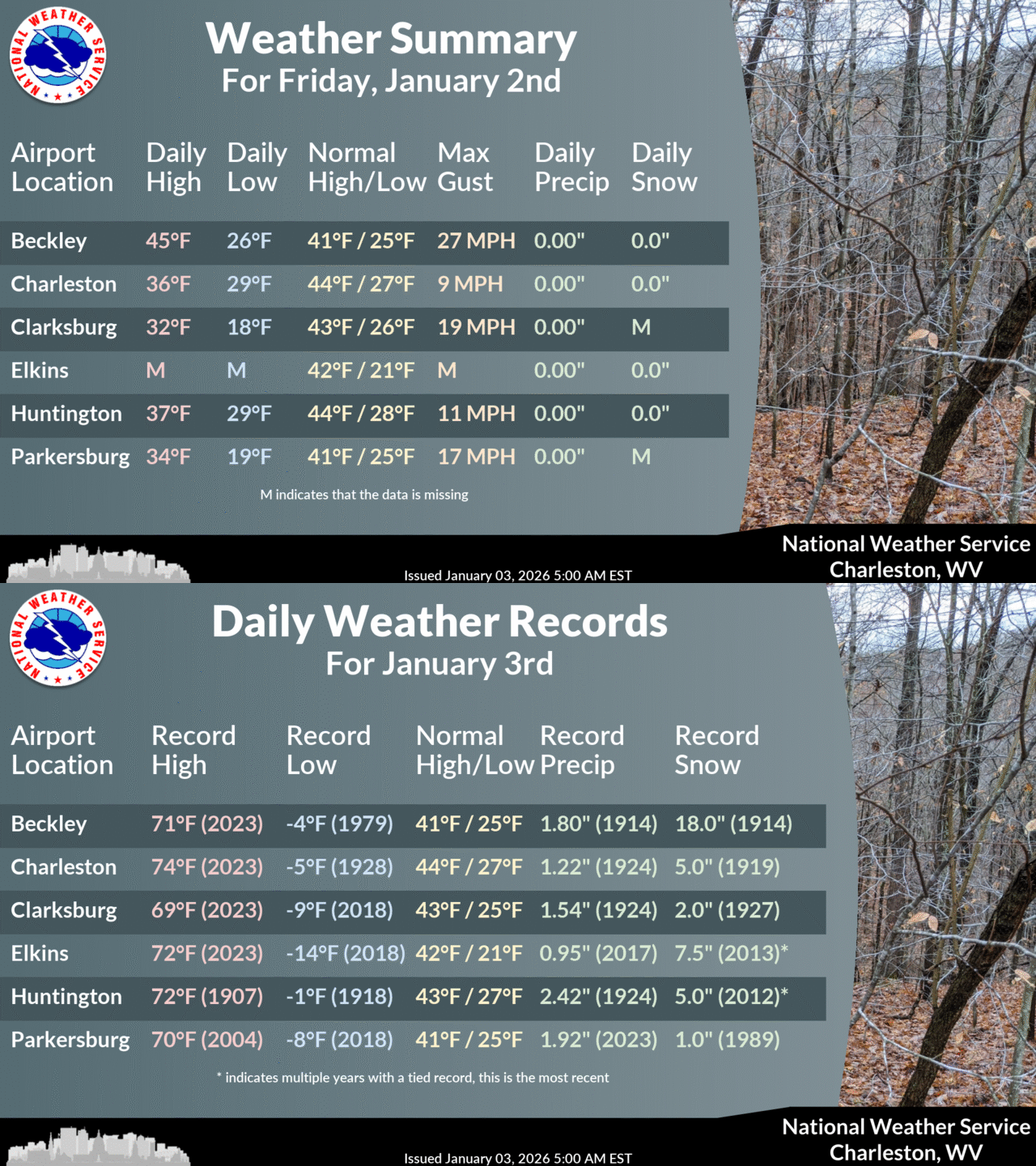
Daily climate information from each of the six climate sites in the NWS Charleston forecast area - Beckley, WV (KBKW); Charleston, WV (KCRW); Clarksburg, WV (KCKB); Elkins, WV (KEKN); Huntington, WV (KHTS); and Parkersburg, WV (KPKB).


Current Weather, Radar & Satellite Rivers & Lakes Weather Hazard Outlook Weather Hazard Briefing Winter Weather Forecasts


What should I do in a flood? What should I do in a tornado? How do I stay safe in a thunderstorm? How do I stay safe in a winter storm?