National Weather Service United States Department of Commerce

Edouard Continues to Impact Texas; Severe Storms and Heavy Rain from the Lower Great Lakes to Mid-Atlantic

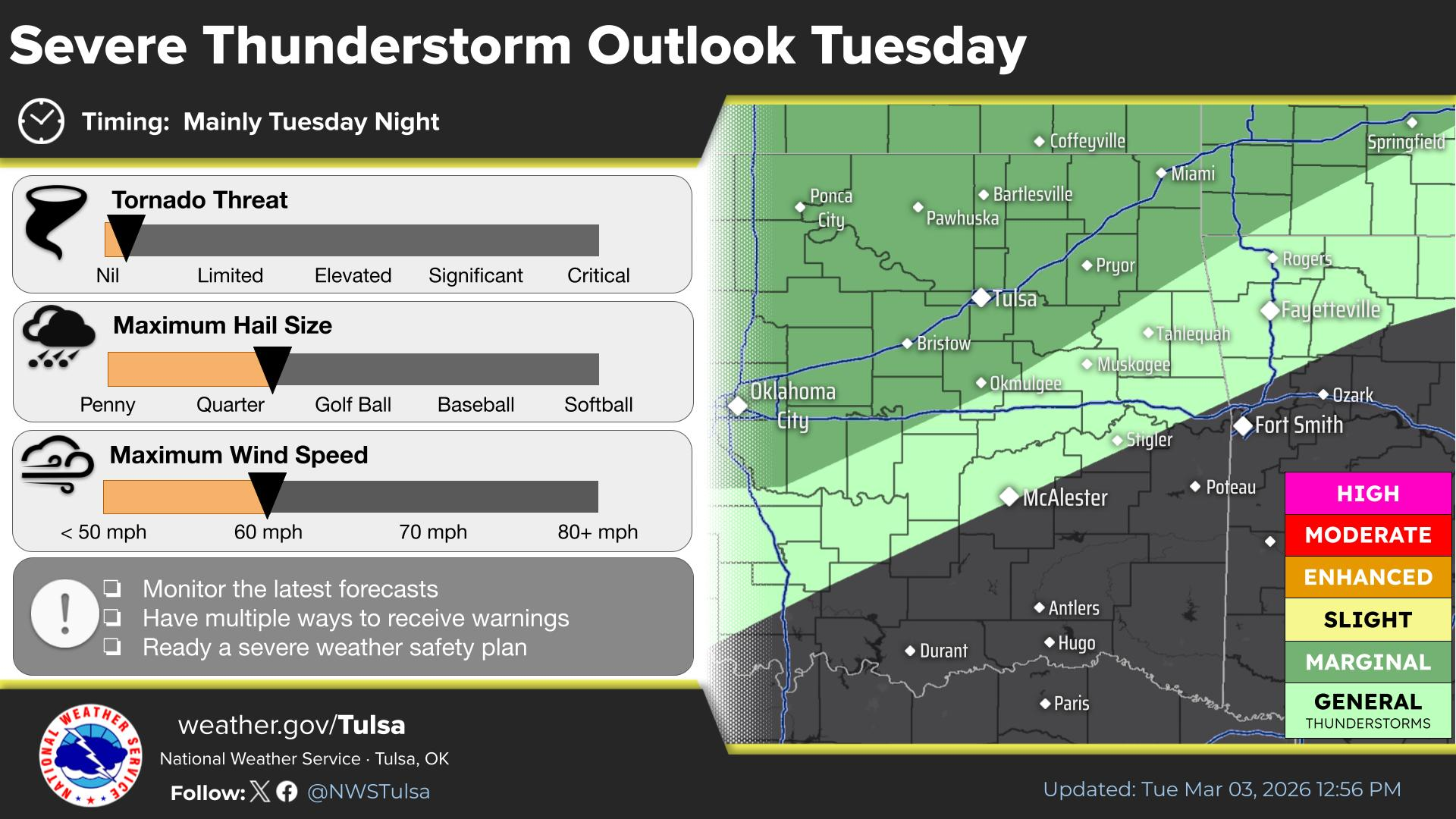
Edouard will continue to bring gusty winds, heavy rainfall, and a flash flood threat over parts of eastern Texas. Severe thunderstorms and heavy rain are possible across portions of the eastern Great Lakes to the Mid-Atlantic today. Severe storms are also expected across the northern Rockies. Dangerous heat persists over the central and eastern states through Friday night. Read More >

Click a location below for detailed forecast.

Last Map Update: Wed, Sep 2, 2026 at 2:28:26 pm CDT

A heat advisory is in effect for a good portion of eastern Oklahoma and the lower Arkansas River Valley areas, running from noon to 8 pm today. Expect heat index values as high as 108 during the afternoon.
Hot weather continues Thursday with a Heat Advisory in effect for portions of northeast Oklahoma and west central Arkansas. Afternoon heat index values will reach up to 109 in the advisory area.
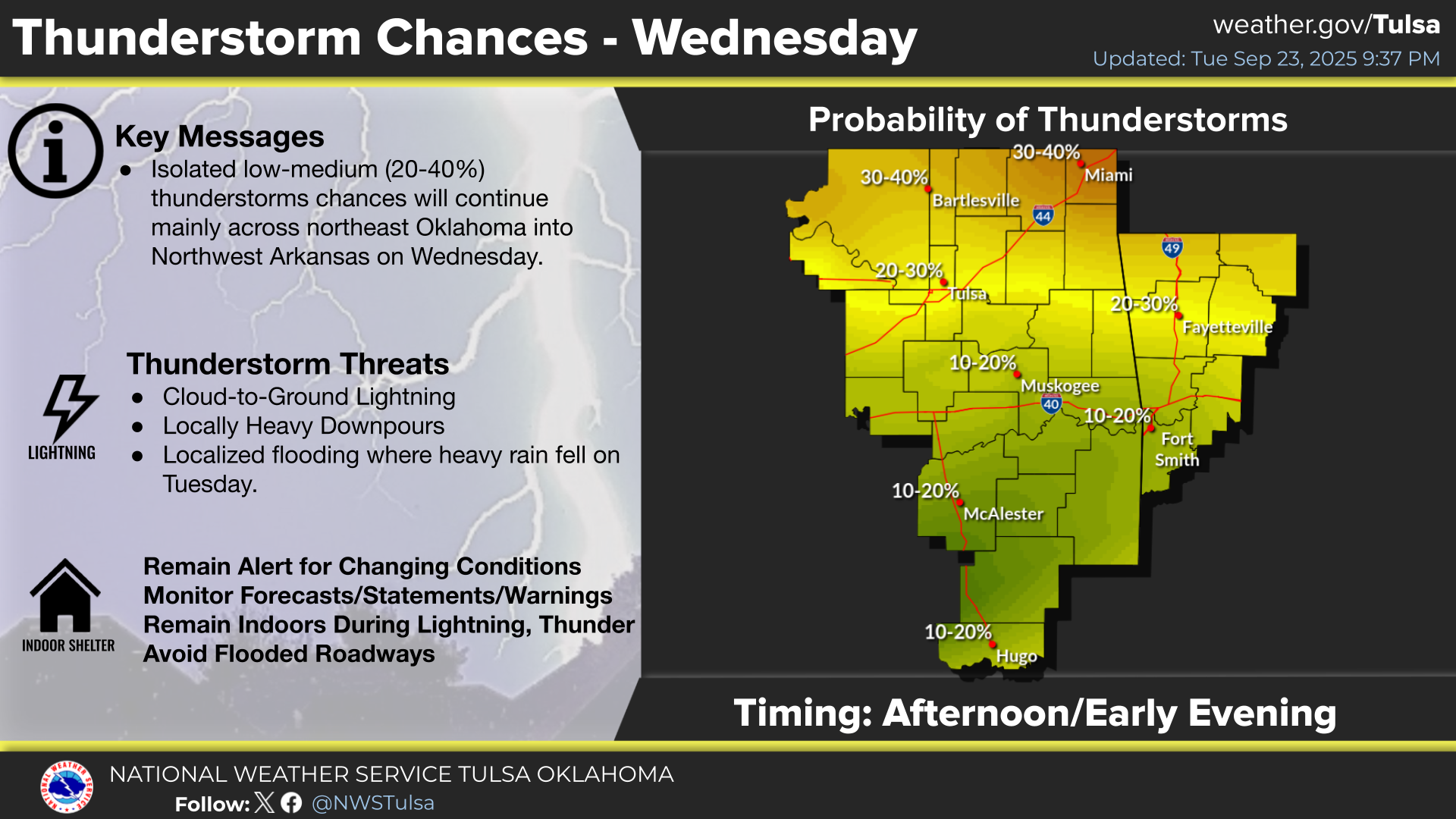
A localized fire weather threat will exist Wednesday, focused across portions of far southeast Oklahoma. Drought-stricken fuels are increasingly receptive to fire spread and increasing winds due to the remnants of Eduoard will lead to the heightened concerns. Heed existing burn bans in this area and notify authorities immediately of any accidental fire starts or if smoke is visible.
The dangerous heat is expected to continue into early next week, possibly longer. Heat stress will likely impact daytime outdoor activities. Drink plenty of water and take breaks in shade when spending time outdoors. There are early signals of a cold front in the Sep 10-15 time frame.
An extended period of hot and dry weather is likely to persist through at least the first part of September. The ongoing drought situation will worsen.
August 2026 will go down as one of the hottest on record. In fact, it was the hottest August on record at Fayetteville's Drake Field! It was the 5th hottest August at Tulsa International Airport and the 3rd hottest August at Ft. Smith Regional Airport. It was also a very dry month, with well below average precipitation observed at the 3 sites.
Latest Text Product Selector (Selected product opens in a new window)

Decision Support Winter Hazards Observations Climate Hydrology
 
 
Social Media Satellite Fire Weather Weather Radio Spotter Training Text Products
 
 
Models