
A cold front will sweep eastward today accompanied by strong to severe thunderstorms for the mid-Atlantic and Northeast today. In the wake of this cold front, autumn like temperatures and gusty winds from the Plains, Mississippi Valley, Great Lakes to most of the eastern seaboard. Fire weather conditions for lower Mississippi Valley into portions of California. For Guam, a typhoon is approaching. Read More >
Drought Information
Mid-October 2026 Update
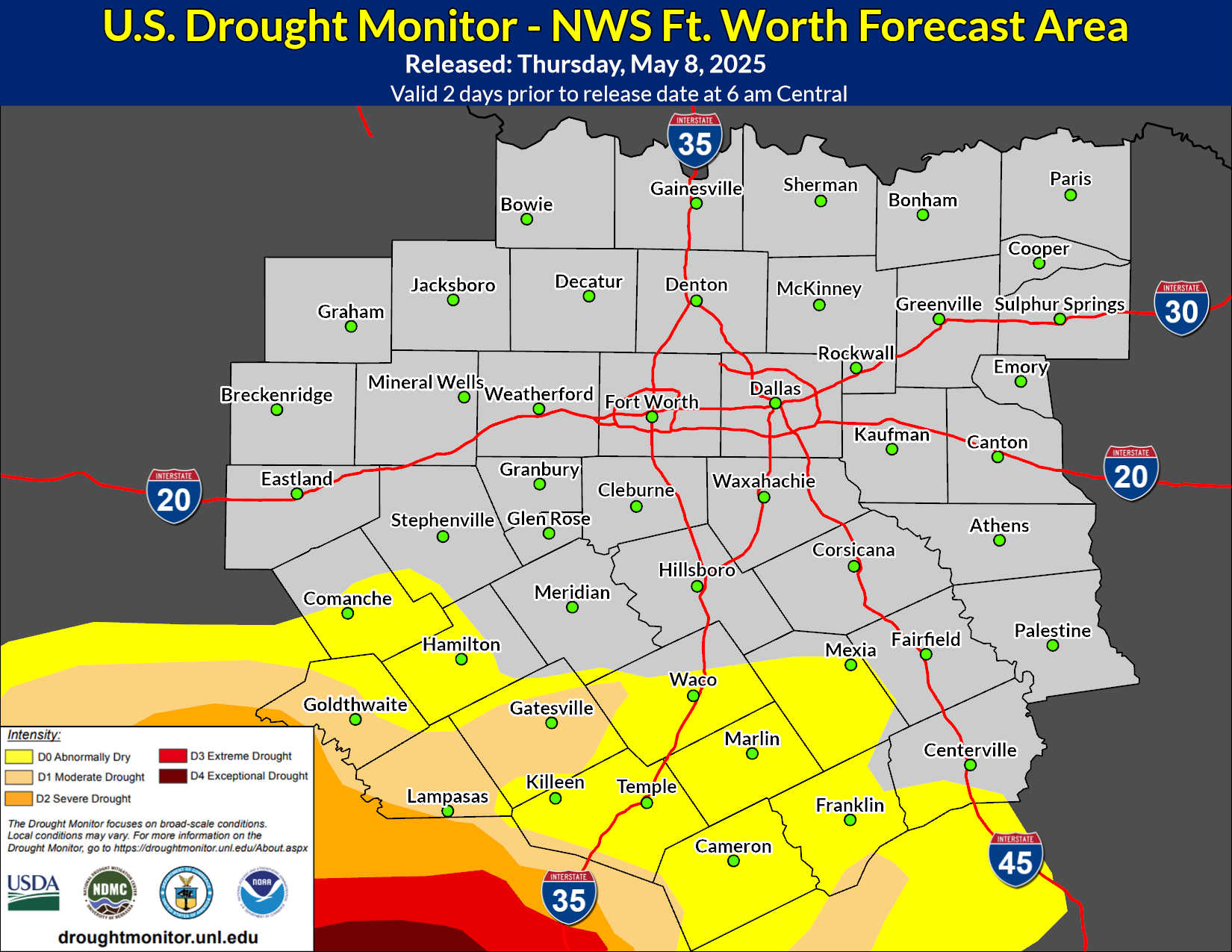
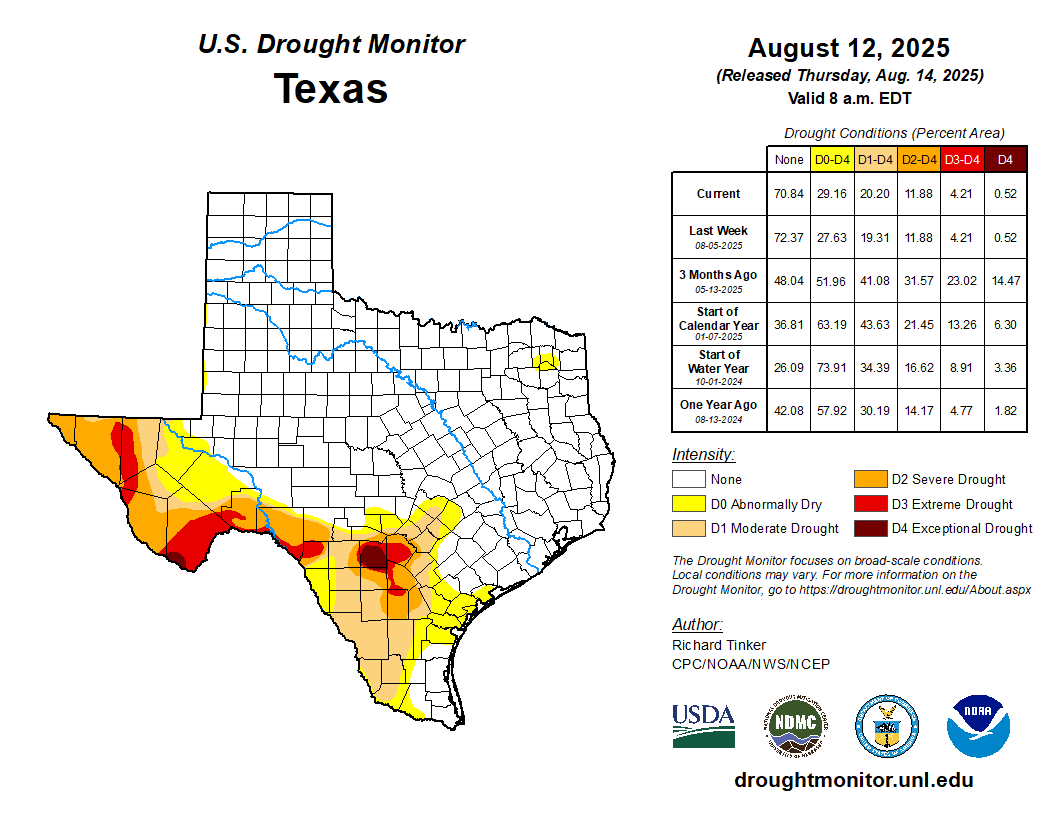
Drought conditions across North and Central Texas worsened considerably through the entire month of September as persistent heat and exceptionally dry weather continued to take a toll on the region. September ranked among the warmest on record at both DFW and Waco, with triple-digit temperatures persisting well into the month. By late September, Severe Drought (D2) had expanded across much of North Texas, with pockets of Extreme Drought (D3) developing along the Red River and portions of the I-35 corridor. Although the prolonged stretches without measurable rainfall finally ended in late September and early October, the recent precipitation has provided only partial relief from the substantial rainfall deficits accumulated since midsummer.
Fortunately, the arrival of a more active weather pattern has brought some encouraging improvements. The latest U.S. Drought Monitor, valid October 6, shows a noticeable reduction in drought severity across portions of North Texas, particularly west of I-35. However, Moderate to Severe Drought (D1-D2) remains widespread across much of the region, with pockets of Extreme Drought (D3) persisting in northeastern North Texas including parts of the DFW Metroplex. Despite recent rainfall, soil moisture deficits remain substantial in many areas, and additional precipitation will be needed to support a more sustained recovery.
Looking ahead, the prospects for additional drought improvement are becoming increasingly favorable. A more progressive weather pattern should provide additional opportunities for rainfall during the latter half of October, although precipitation amounts and coverage will vary considerably. The Climate Prediction Center’s Monthly and Seasonal Drought Outlooks favor continued improvement or removal of drought conditions across much of North and Central Texas through the end of December.
Adding confidence to the longer-term outlook is the continued strengthening of El Niño, which is now expected to become a strong to very strong event during the upcoming winter. Historically, El Niño favors a more active southern storm track and above-normal precipitation across Texas during the cool season. While meaningful drought recovery will ultimately depend on the frequency and coverage of future rainfall events, the transition toward a more favorable precipitation pattern suggests that additional drought improvement is increasingly likely through the remainder of fall and into winter.
Click Here To View The Most Recent North and Central Texas Drought Information Statement
Note: New Drought Information Statements will be made available when drought conditions reach D3 (Extreme Drought or higher)
Current Drought Conditions
Fire Danger
With winter dormancy ongoing, any extended period without precipitation could reignite wildfire concerns. The days with the greatest potential for fire initiation and spread are those that are sunny and warm with low humidity and breezy winds. This potential will diminish with the onset of the spring growing season.
Even if a formal burn ban is not in effect for your area, it is still important to be vigilant about fire usage. Avoid open flames near dry vegetation, and assure all coals and embers are fully extinguished.

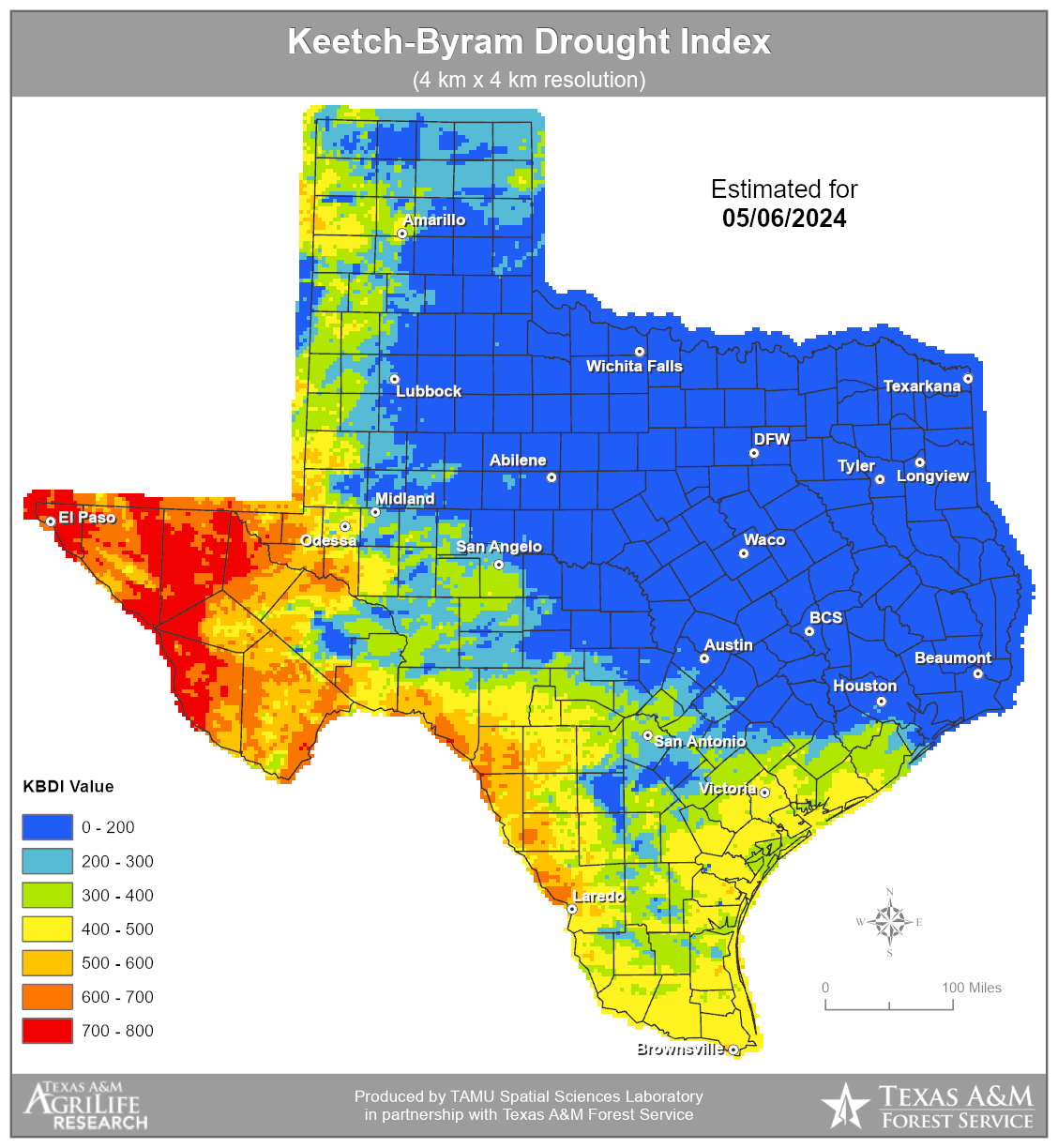
The Keetch-Byram Drought Index is a drought statistic specifically designed to assess fire danger.
Drought Links
 National Integrated Drought Information System
National Drought Mitigation Center



 Follow us on X
 Follow us on Facebook
 Follow us on YouTube
 FWD RSS Feed